
How to Identify Counterfeit Bills
Counterfeit money has been with us throughout history since the first forms of currency were introduced to society.
Counterfeit money differs from genuine currency in a variety of ways, and if you familiarize yourself with the differences, you will better your chances at spotting counterfeit bills if you should ever come across one.
First of all, if you suspect you are in possession of a counterfeit bill, examine the banknote carefully. Compare the bill in question with a real bill of the same dollar amount and printing series. Certain series of bills can have different features and pictures on them depending on what year the currency is from.
Be sure to pay close attention to the printing quality and paper material of the bills you are analyzing. Remember that you are looking for anything that looks different compared to real banknotes.
There are several factors to consider when trying to identify fake bills from real currency:
Portrait

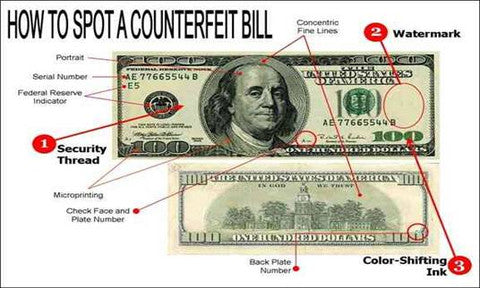
The pictures on real currency looks authentic and sticks out against the background. The portrait on fake bills usually looks flat and dull in color. Details blend into the bills artwork, and are often too dark or blemished.
Federal Reserve & Treasury Seals

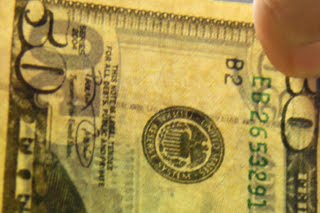
On real bills, the logos of the Federal Reserve and Treasury seals look very distinct and look sharp and clear. Counterfeit versions of the seals could appear uneven, dull, or have broken saw tooth points.
Border

The fine lines in the border of a genuine bill are clear and unbroken. On counterfeits, the lines in the outer margin and scroll work may be blurred and not clear.
Serial Numbers
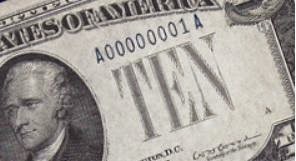
Authentic serial numbers are unique in style and are evenly spaced. The serial numbers are printed in the same color of ink as the Treasury Seal. On fake bills, the serial numbers could have different colors or shades of ink as compared to the Treasury seal. In addition, the numbers could be unevenly spaced and disjointed.
Paper
Genuine currency paper has tiny red and blue fibers embedded throughout. Counterfeiters try to duplicate the fibers by printing them throughout the lines on the paper. However, under close inspection it will show that on counterfeit bills, the lines are printed on the outer layer of the fake bills and are not ingrained into the paper. On lesser quality fake bills, a counterfeit pen can reveal the paper of the bills to fraudulent .
There are certain other features to look for as well:
Paper Features

With every currency produced, a corresponding paper is manufactured. Banknote paper is made from cotton pulp, which gives it better durability than commercial papers and a very distinctive feel.
Often the way a counterfeit bill feels causes someone to take a closer look. If bank note paper is held under ultra violet light it is dull compared to commercial papers.
The paper manufacturing process allows for a number of features to be created.
Watermark
The watermark is one of the most obvious security features of a paper banknote. When held up to the light an image can be seen in the paper, usually a portrait similar to that printed on the note. The image of the watermark is caused by different thickness of paper, with light areas on the mark being a result of less paper.
The highlighted effect of "thin" paper is sometimes used as an added security effect in small specific areas within a watermark. A watermark is an excellent security feature. A counterfeiter is very unlikely to manufacture his own paper. Watermarks can be simulated in some ways, but the effects are crude.
Threads

Threads are embedded within the paper fiber and can be invisible or have a starburst effect. The thread appears to weave in and out of the paper when viewed from one side. However when held up to the light the thread will always appear as a solid line. Features can be built into the thread material themselves. The thread is a difficult feature to counterfeit but counterfeiters have been known to print a thin gray line or a thin line of varnish in the area of the thread.
Other Embedded Features
While the paper is in the pulp stage, various elements can be added that then become embedded in the paper in a random fashion. It is also possible to tint the paper.
Plastic
Some countries have adopted the use of plastics to create their currency. Security features are built into the plastic. There is a coating with an opaque white transparency. Simulated watermarks are produced by printing additional designs in opaque white. These features offer good protection from color copier counterfeiting.If you familiarize yourself with the features and characteristics of genuine currency and make careful comparisons if you encounter a counterfeit bill, you will be able to distinguish a counterfeit bill from a genuine bill with ease.

Identifying Bills with Counterfeit Money Detectors

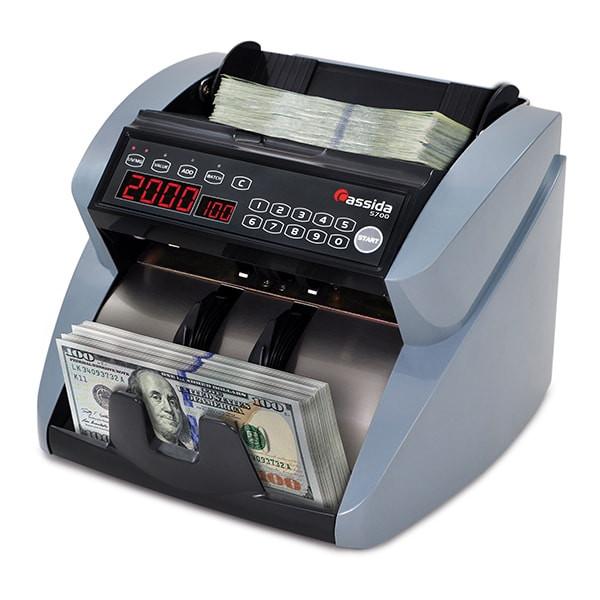
One of the most full proof ways to spot counterfeits is with money detector machines. The advantages of using the machines over by hand is that it removes the chance of human error when examining bills and a good detector machine usually takes a second to analyze a bill and tell you if it is real or not. Using money counters can also help if you need to count cash and check for fakes at the same time.
When looking to get a money detector machine, the features you want to look out for are Infrared, Magnetic, color spectrum and optical density analysis. It is best use reliable money detectors that cover all bases so it eliminates the chances of fake bills going into your business.

Comments
Leave a comment