
A Brief Guide to U.S. Counterfeit Money Laws
Updated September 2026
Nobody wants to discover a fake $100 bill in the cash drawer at the end of the day. Unfortunately, counterfeit money remains a real problem for businesses, banks, retailers, and anyone who handles cash.
The good news? You don't need to be a legal expert to understand the basics of counterfeit money laws — or to take practical steps to protect your business.
Here's what you need to know about U.S. federal counterfeit currency laws, what has changed in recent years, and what to do if you find a suspicious bill.

Is Counterfeiting Money Illegal?
Yes — and federal law takes it seriously.
Under 18 U.S.C. §§ 471–473, federal offenses can include:
- Making or altering counterfeit U.S. currency
- Knowingly passing counterfeit money with intent to defraud
- Buying, selling, transferring, or receiving counterfeit currency with the intent that it be used as genuine
For the major federal counterfeiting offenses, the maximum penalty can be up to 20 years in federal prison, along with a possible fine.
Counterfeiting isn't limited to the person who actually prints the fake money. Knowingly putting counterfeit bills into circulation can also be a federal offense.
What If You Accidentally Receive a Fake Bill?
This is an important distinction.
Simply receiving a counterfeit bill without knowing it is counterfeit does not automatically make you a counterfeiter.
The circumstances and, for relevant offenses, the person's knowledge and intent matter.
The problem comes when someone discovers or suspects that a bill is counterfeit and then knowingly tries to spend it anyway.
If you think you've received a fake, don't try to "get rid of it" by passing it to the next person. That's where an innocent mistake can potentially turn into a much more serious situation.
Counterfeit reporting changed in 2024
The U.S. Secret Service also changed its counterfeit-currency reporting procedure effective November 1, 2024.
The old electronic submission process through the USDollars website was discontinued. Financial institutions and other eligible organizations now follow updated Secret Service procedures for submitting suspected counterfeit currency, with investigative leads generally reported to local law enforcement or a Secret Service field office.
That's especially relevant for businesses that regularly handle large amounts of cash.
What About Pictures of Money?
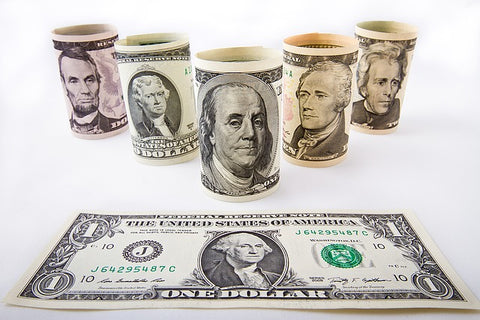
You've probably heard that it's illegal to make a picture of a dollar bill.
That's not quite that simple.
Federal law allows certain legitimate reproductions of U.S. currency as long as specific requirements are followed.
For example, the Bureau of Engraving and Printing says permitted color illustrations must generally be less than 75% or more than 150% of the currency's linear dimensions, must be one-sided, and must meet requirements concerning the destruction or deletion of reproduction materials after final use.
So that picture of a $100 bill in an educational article isn't automatically illegal — but reproducing currency for fraudulent purposes is an entirely different matter.
What Should You Do If You Find a Counterfeit?
If a bill looks suspicious, don't put it back into circulation.
Instead:
- Keep it separate from genuine currency.
- Don't attempt to spend it.
- Make note of relevant transaction information if available.
- Follow your business's counterfeit-currency procedures.
- Contact local law enforcement or follow the applicable Secret Service reporting procedure.
The Federal Reserve also recommends notifying local police when you believe you've received counterfeit currency.
And unfortunately, a counterfeit bill cannot simply be exchanged for a genuine one. Once a note is determined to be counterfeit, it has no monetary value.
How Can Businesses Protect Themselves?
Knowing what genuine currency looks like is the first line of defense.
Modern U.S. bills contain a variety of security features, including watermarks, security threads, color-shifting ink, microprinting, and other denomination-specific features.
But employees handling cash don't always have time to inspect every bill under a microscope.
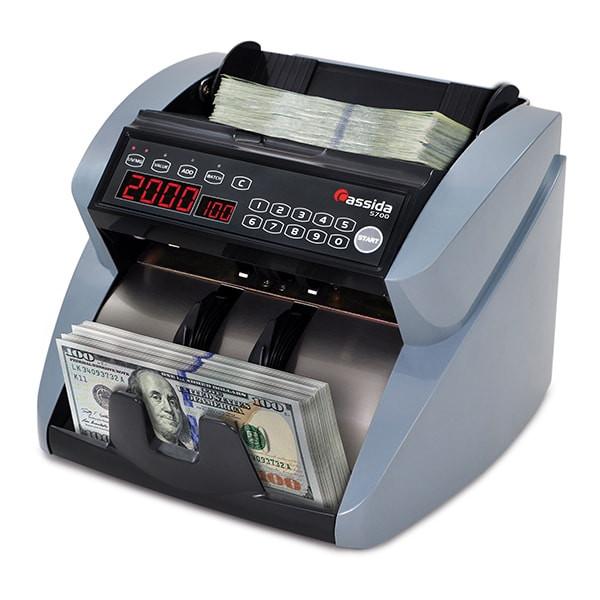
That's where counterfeit detectors can be useful.
A good detection system can give employees another layer of protection when they're handling cash quickly — whether that's at a retail counter, restaurant, hotel, casino, or cash office.
At iTestCash, we offer a range of counterfeit money detectors designed to help businesses identify suspicious bills quickly and efficiently.
Of course, no single detection method should be treated as a magic solution. Employee awareness and familiarity with genuine currency security features are still important.
What About Counterfeit Pens?
Counterfeit detector pens are one of the most familiar tools, but they aren't perfect.
These pens primarily test the properties of the paper rather than checking every security feature incorporated into modern U.S. currency. As a result, they can produce false positives or false negatives.
For businesses that handle significant amounts of cash, using a more comprehensive authentication method can provide an additional layer of protection.
The Bottom Line
Federal counterfeit-money laws are serious, but the basic rules are fairly straightforward:
Don't make counterfeit money. Don't knowingly pass it. And don't knowingly put suspected counterfeit currency back into circulation.
For businesses, prevention is much easier than dealing with a counterfeit loss after the fact.
Train employees to recognize genuine currency, establish a clear procedure for suspicious bills, and consider using appropriate counterfeit-detection equipment for your cash-handling environment.
A few seconds spent checking a suspicious $100 bill can be a lot cheaper than discovering a counterfeit stack after the money has already left your business.
This article is intended for general informational purposes and is not legal advice. Federal and state laws may differ, and specific circumstances can affect how the law applies.

Comments
Leave a comment